
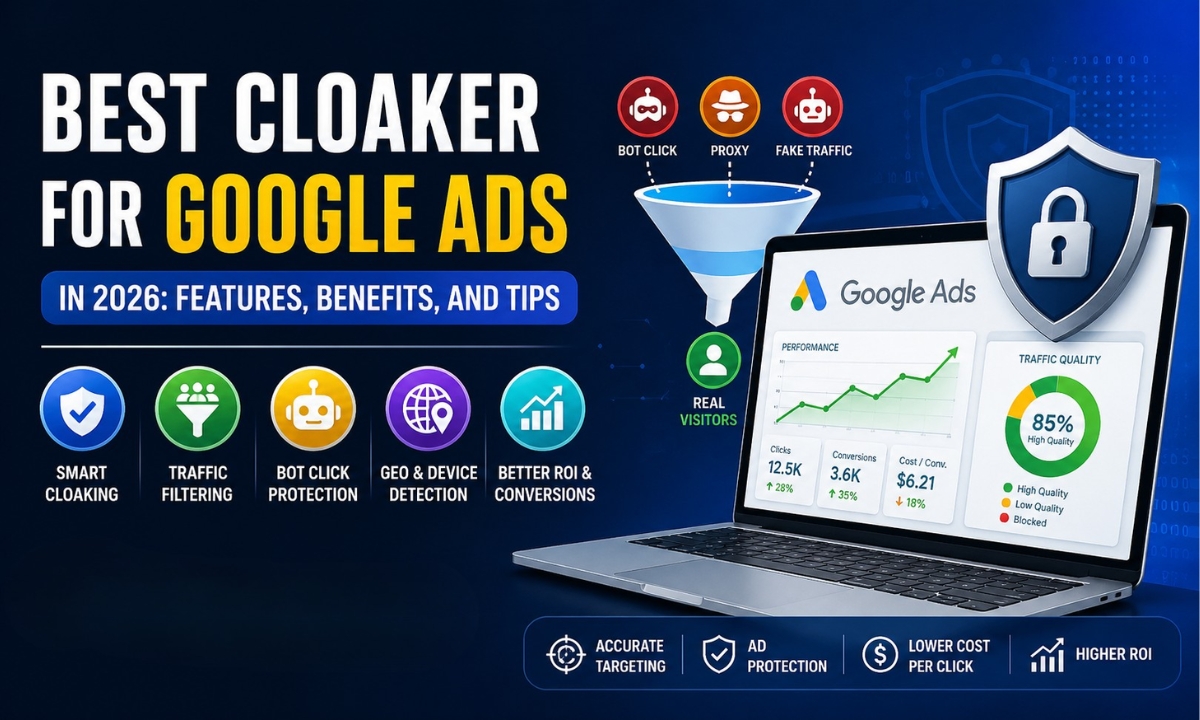
In the fast-changing world of digital advertising, marketers are constantly searching for ways to improve campaign performance and protect their ad spend. With increasing competition and strict ad policies, many advertisers explore advanced traffic solutions like best Cloaker for Google ads to manage their campaigns more effectively.
In 2026, advertising is not just about launching ads. It is about ensuring traffic quality, reducing invalid clicks, and maximizing return on investment with clean, trustworthy data.
Key takeaway: Long-term Google Ads performance depends more on traffic quality and policy-safe optimization than on shortcuts or manipulative tactics.
At TrafficSaviour, the focus is on helping advertisers improve campaign performance by identifying and reducing unwanted traffic sources while improving overall ad efficiency.
Understanding Traffic Segmentation in Google Ads
Before using advanced traffic tools, it is important to understand how traffic segmentation works. Advertisers often analyze users by location, device type, session behavior, and engagement quality to understand which clicks are worth paying for.
Some systems use that information to personalize user experiences or improve campaign routing. However, platforms like Google closely monitor for misleading behavior, so advertisers should always stay within policy and focus on transparent optimization.
The growing interest in advanced traffic tools in 2026 reflects how difficult it has become to maintain quality traffic amid stricter review systems and more aggressive competition.
Why Advertisers Look for Advanced Traffic Solutions
Digital advertisers face several common challenges today:
- High cost per click
- Strict ad approval systems
- Fake traffic and bot click activity
- Competitor tracking and ad spying
Because of these issues, many marketers look for better ways to control traffic behavior and improve targeting efficiency. Still, long-term success is not about hiding or changing content. It is about delivering relevant ads to the right audience with clear data and strong protection.
Features of Modern Traffic-Quality Systems
1. Traffic Filtering
Modern systems analyze incoming visitors and separate real users from suspicious sources such as proxy networks, bot traffic, or repetitive invalid sessions.
2. Device and Location Detection
These tools identify user devices and locations to support accurate targeting and reduce irrelevant impressions.
3. Behavior Analysis
By tracking how users interact with ads and landing pages, systems can detect unnatural patterns such as repeated non-converting clicks or suspicious session clusters.
4. Real-Time Monitoring
Advertisers can monitor traffic quality live and make faster campaign adjustments when suspicious activity appears.
Practical tip: The best systems do not just block traffic. They help you understand why traffic quality is changing and where waste is entering your funnel.
Benefits of Using Advanced Traffic Systems
When used correctly and within ad-platform policies, traffic-management tools can create meaningful performance gains:
- Improved campaign accuracy
- Better ROI and conversion rates
- Reduced wasted ad spend
- Cleaner traffic data for decision-making
In competitive industries, every click matters. That is why strong advertisers focus on traffic quality instead of just traffic volume.
The Role of TrafficSaviour in Campaign Protection
TrafficSaviour is designed to help advertisers identify and reduce low-quality traffic. It works by analyzing user behavior and filtering suspicious activity before it affects campaign performance.
Even a small amount of invalid traffic can meaningfully distort results. That is why tools like TrafficSaviour are becoming essential for advertisers who want more consistent performance and more reliable optimization data.
Challenges with Traffic Quality in 2026
As advertising systems become more advanced, fraudulent traffic methods also evolve. Some common challenges include:
- Automated bot click systems
- Hidden traffic using proxy servers
- Fake engagement from low-quality networks
- Misleading analytics data
These issues make it harder to understand real performance metrics. Without proper tools, campaigns can appear active while failing to generate meaningful conversions.
Importance of Choosing the Right Tool
Selecting the right solution is critical. A reliable traffic-quality system should focus on:
- Transparency
- Traffic quality improvement
- Compliance with ad policies
- Long-term campaign stability
Instead of relying on risky shortcuts, advertisers should invest in sustainable optimization strategies that improve real user engagement and strengthen account health.
Best Practices for Better Ad Performance
1. Focus on Quality Traffic
Avoid low-quality sources and prioritize real user engagement.
2. Monitor Analytics Regularly
Track bounce rate, conversion quality, session duration, and assisted conversions to identify anomalies early.
3. Optimize Targeting
Refine audience settings to reach users who are more likely to convert.
4. Use Smart Filtering Systems
Tools like TrafficSaviour help detect invalid traffic and improve campaign accuracy without relying on deceptive tactics.
Future of Advertising and Traffic Control
The future of digital advertising is becoming more AI-driven and automated. Systems are getting better at detecting fake behavior, bot click patterns, and traffic manipulation.
While many advertisers still search for the best tool for cloaking, the industry is moving toward transparency, automation, and data accuracy.
That means successful marketers in 2026 will rely less on outdated tricks and more on:
- AI-based optimization
- Real-time traffic validation
- Conversion-focused strategies
- Ethical advertising practices
Advertisers who adapt to this shift will build more stable campaigns, stronger data pipelines, and better long-term ROI.
 Support
GitHub
Support
GitHub