
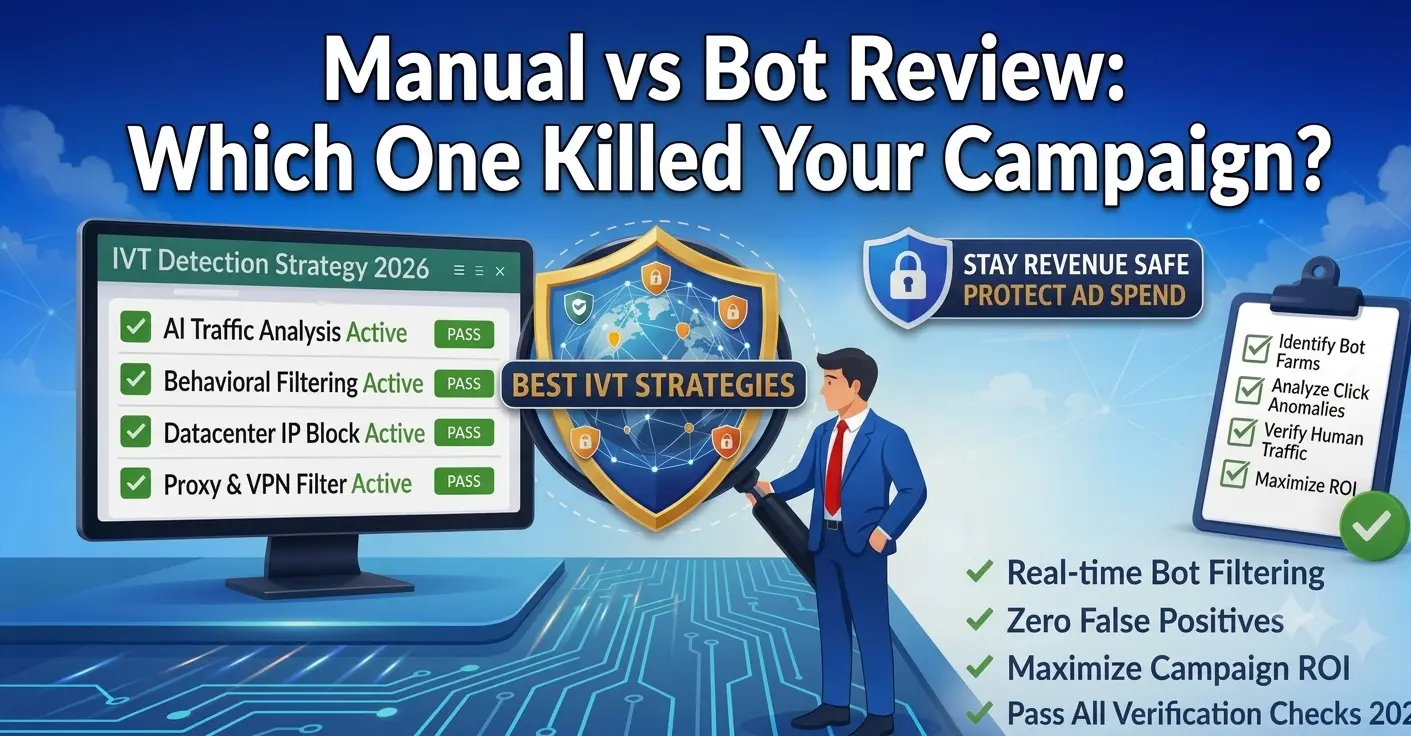
Learning the mechanisms behind the approval process helps you comprehend the reasons why your advertising campaigns have been blocked. Even though bots can detect any discrepancies within the patterns in just a split second, the comparison between manual vs bot reviews can make it clear whether the campaigns were rejected through the use of the artificial intelligence system or human policy specialists. The implementation of ad protection tools such as TrafficSaviour makes it possible for media buyers to examine these signals and protect their campaigns.
What Is the Difference Between a Manual Review and a Bot Review?
When running a marketing campaign through platforms like Google, Meta, or TikTok, your content will be put under heavy review. It is important for you to know who, either a human or a computer, has reviewed your content so you can modify it accordingly.
Where there is an automated review, there is use of a bot detection solution that checks the text, image, metadata, and landing URL of your creative using predefined policy criteria.
On the other hand, a manual check entails using a human policy expert who will manually check your ad text and landing pages. Manual checks take place when an algorithmic system identifies ambiguous signals for compliance or when your account is receiving complaints from users.
| Review Dimension | Bot Review (Automated) | Manual Review (Human Specialist) |
|---|---|---|
| Speed | Instant to 30 minutes | 24 to 48 hours |
| Trigger Mechanism | Pattern matching, keyword flags, image OCR | Machine learning uncertainty, appeals, user reports |
| Detection Focus | Code anomalies, restricted text, aggressive claims | Brand tone, contextual nuance, deceptive design |
| False Positive Rate | High (strict, literal pattern enforcement) | Low (context-driven understanding) |
| Primary System Used | Bot detection solutions & OCR filters | Policy enforcement queues & manual dashboards |
How Can You Tell Which Review Rejected Your Ad Campaign?
The difference between a bot and a human rejection should be identified based on certain parameters like time of response, rejection messages, and audit of landing pages.
1. Assess the Time of Response
In case the campaign status changes from "Approved" to "Disapproved" very quickly, you'll be detected by the automated system. The review process of the human reviewer is normally too slow.
2. Determine the Specificity of the Policy Violation Message
Automatically generated violation notices normally give generic violation messages like “Unacceptable Business Practices” or “Prohibited Content". Human evaluators typically include detailed subcategories or custom messages in their notifications at the individual account level.
3. Analyse Website Activity
Look through your website or web analytics to check whether there was crawling activity by one of the known user agents used by platforms to inspect the code of submitted landing pages. If you notice quick requests from IP addresses that belong to Meta or Google right after submission, an automated crawler performed the review.
Why Do Automated Bot Reviews Cause So Many False Positives?
Compliance filters based on automation give precedence to rapidity and scalability rather than context. Ad networks use machine learning technology and bot detection systems to examine millions of ads per day; therefore, stringent false positives are acceptable within such platforms.
Over-matching
Misinterpret
Script Flags
Most automated systems for reviews usually turn out to be inaccurate owing to the following three technical reasons:
- Literal Keyword Matching: The software searches for and reports safe keywords, which appear to be improper keywords (for example, “weight loss” as against “loss of weight in financial portfolio”).
- Optical Character Recognition Issue: The image filter perceives the background colour, skin colour, or contrast colour as an adult image.
- Technical Redirection/Scripting Issue: External scripts or rapid redirection of URL/IP is perceived as a cloaking technique.
How Do You Fix Your Campaign After a Bot vs Manual Flag?
A solution to a rejected advertisement is highly dependent on what type of system led to the rejection.
Approach to Resolving Ad Flag by Bot System
- Identify Potential Policy Violators: Eliminate risky language and strong guarantees or declarations in your advertisement’s headline and content.
- Fix Up Landing Page: Block unnecessary third-party tracking and pop-up scripts that may resemble cloaking techniques.
- Upload Without Altering Advertisement Content Structure: Upload the ad again with minor changes to metadata.
How to Beat Human Manual Disapproval for a Human Manual
- Landing Page Audit Context: Make sure your landing page includes information regarding your privacy policy, terms of service, all contact details, and prices.
- Copy Purpose Matching Brand Values: Make sure your ad copy does not exaggerate or use any sensationalism and is in line with what is advertised on the landing page.
- Appeal Submission: Ask for a manual appeal from your ad manager’s dashboard. Explain your business and ensure transparency and compliance.
Frequently Asked Questions
A manual review of the campaign usually takes from 24 to 48 hours. When there is a holiday season or some major changes in the platform, the manual queue could increase up to 3-5 days of work.
Yes. The ad may be initially approved by a bot at the launch time but get marked for manual review in the next stage of checking.
Crawlers from ad platforms scan the landing pages for policy compliance, page load time, and script protection. If your website blocks such crawlers through excessive security measures, your advertising campaign will get an automatic rejection due to unreachable landing pages.
Conclusion: Understanding the Manual vs Bot Review Process
It is hard to overestimate the significance of knowing how to go through the manual and bot review because this will help to make sure that your ads will be delivered successfully and there will not be any adverse effect on your reputation as a publisher. While automated systems and bots recognize patterns and code validation, the human reviewer considers the context and safety of consumers. Being aware of the reason why your ad campaign was rejected will enable you to make necessary changes and refill your ad budget.
 Support
GitHub
Support
GitHub